
Why Bitcoin Tanked Below $60,000: Exploring Three Key Theories
Feb 09, 2026 23:38
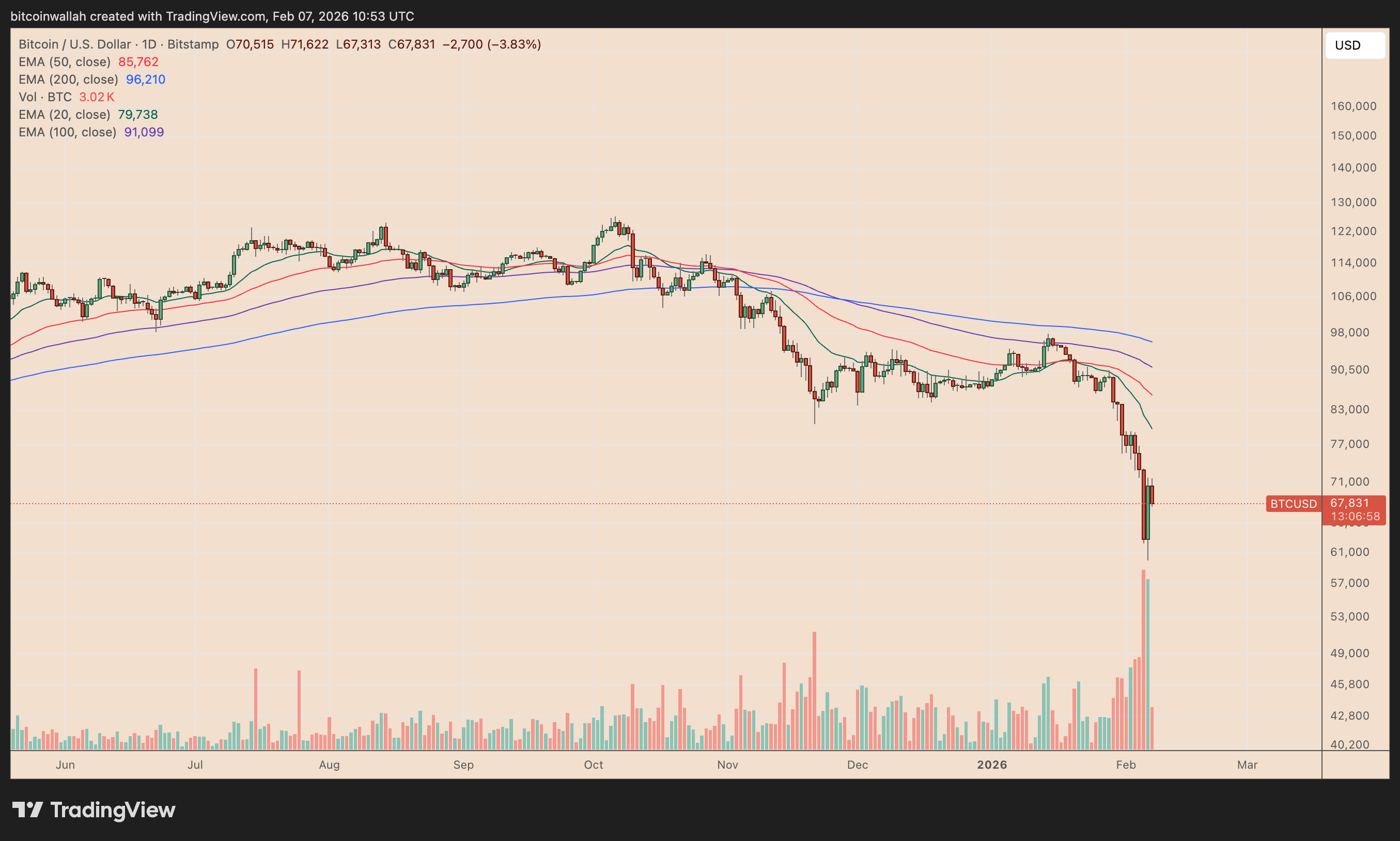
Bitcoin took a serious hit over the past month, falling more than 40% to a yearly low of $59,930 on Friday. That's more than half gone from the October 2025 peak around $126,200. Traders and analysts are circling a few explanations that seem to fit what happened.
The ideas boil down to three main ones. First, Hong Kong hedge funds appear to have been a big spark. They loaded up on leveraged bets that Bitcoin would keep climbing, mostly through options on ETFs like BlackRock's IBIT. To finance it cheaply, they borrowed in Japanese yen, converted the money, and poured it into crypto. When Bitcoin leveled off and yen borrowing got more expensive, the positions turned sour fast. Margin calls forced them to dump Bitcoin and other holdings, which fed right into the bigger slide. Parker White at DeFi Development Corp highlighted this, and the huge trading volumes on IBIT—like $10.7 billion in one session—line up with the story.
Second, Arthur Hayes, the former BitMEX CEO, has a different angle involving U.S. banks. He thinks places like Morgan Stanley ended up selling Bitcoin to cover their hedges on structured notes connected to spot Bitcoin ETFs. These notes let clients take directional bets on BTC with certain safeguards. But when prices broke important levels—around $78,700 in some Morgan Stanley offerings—the banks had to delta-hedge by selling more BTC or futures. That setup creates negative gamma: the lower it goes, the more they sell, which just makes the drop steeper and turns them into unwilling sellers instead of steady providers.
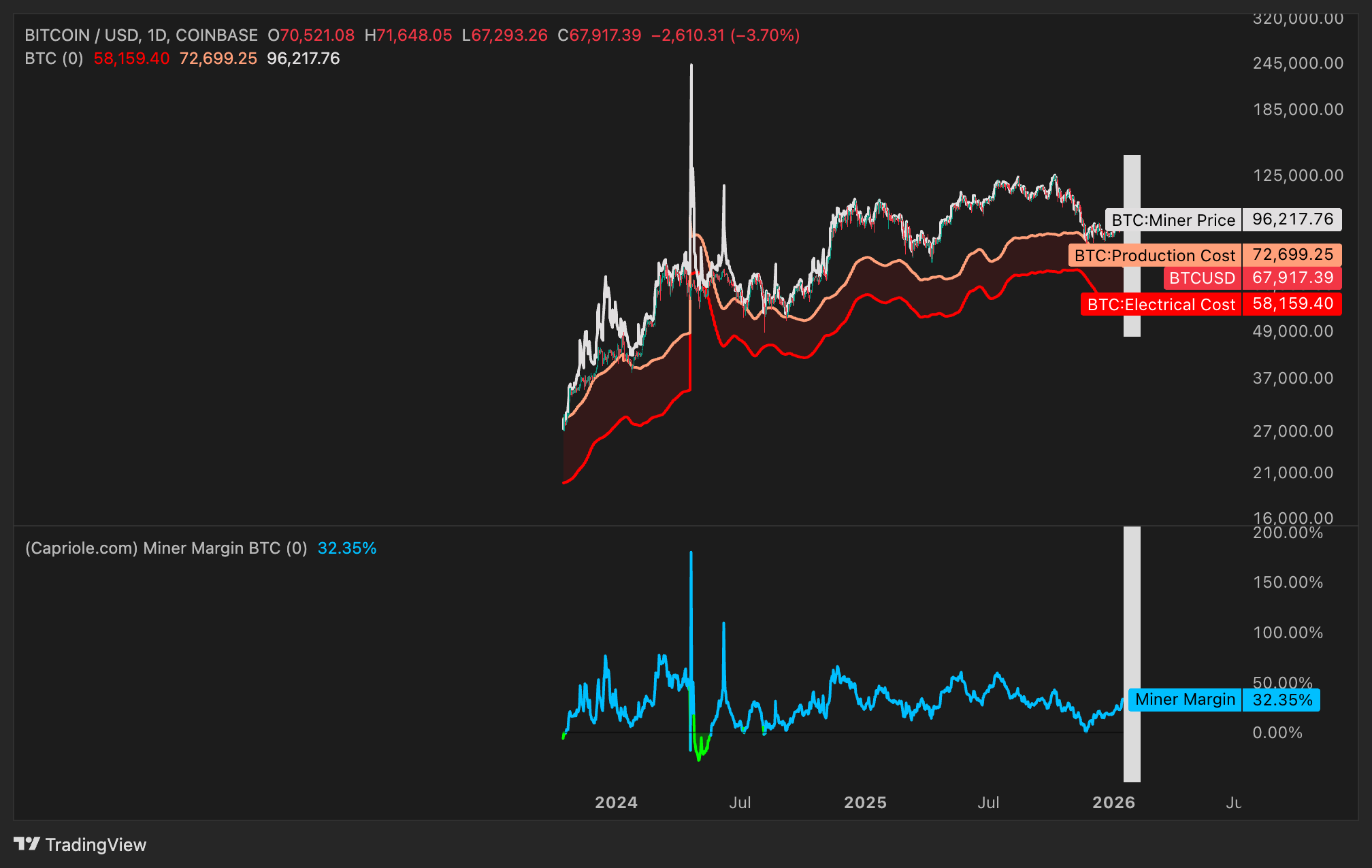
Third, there's talk about miners pulling back. AI data center demand is pulling resources away from Bitcoin mining, and hash rate has already dropped 10-40% in places. Riot Platforms sold $161 million worth of BTC in December 2025 while shifting toward general data centers, and IREN announced a similar move not long ago. The Hash Ribbons indicator is showing stress too—the 30-day hash rate average dipped below the 60-day one, a pattern that often means miners are hurting and might sell more to stay afloat. Current estimates put electricity costs for mining one Bitcoin at roughly $58,160, with total production expenses near $72,700. A drop back under $60,000 would put real pressure on a lot of operations, and even long-term holders seem more hesitant lately—their share of the supply is at a nine-month low.
Hong Kong hedge funds behind BTC dump?
One theory getting a lot of attention points straight to Asia. Some Hong Kong hedge funds had built up large leveraged long positions on Bitcoin, frequently using options tied to ETFs such as BlackRock's IBIT. Parker White, COO and CIO at Nasdaq-listed DeFi Development Corp, explained that they funded these bets by borrowing inexpensive Japanese yen, converting it, and deploying the capital into high-risk assets like crypto, expecting continued upside.
When Bitcoin's rally paused and yen borrowing rates rose, those positions became unsustainable. Lenders called for more collateral, pushing the funds to liquidate Bitcoin and other holdings rapidly. That wave of forced selling added serious downward pressure and helped turn a stall into a full-blown drop.
Morgan Stanley caused Bitcoin selloff: Arthur Hayes
Arthur Hayes offered another view that's picking up steam. In a post on X, the ex-BitMEX CEO proposed that major banks, including Morgan Stanley, had to offload Bitcoin or related assets to hedge structured products linked to spot Bitcoin ETFs like IBIT.
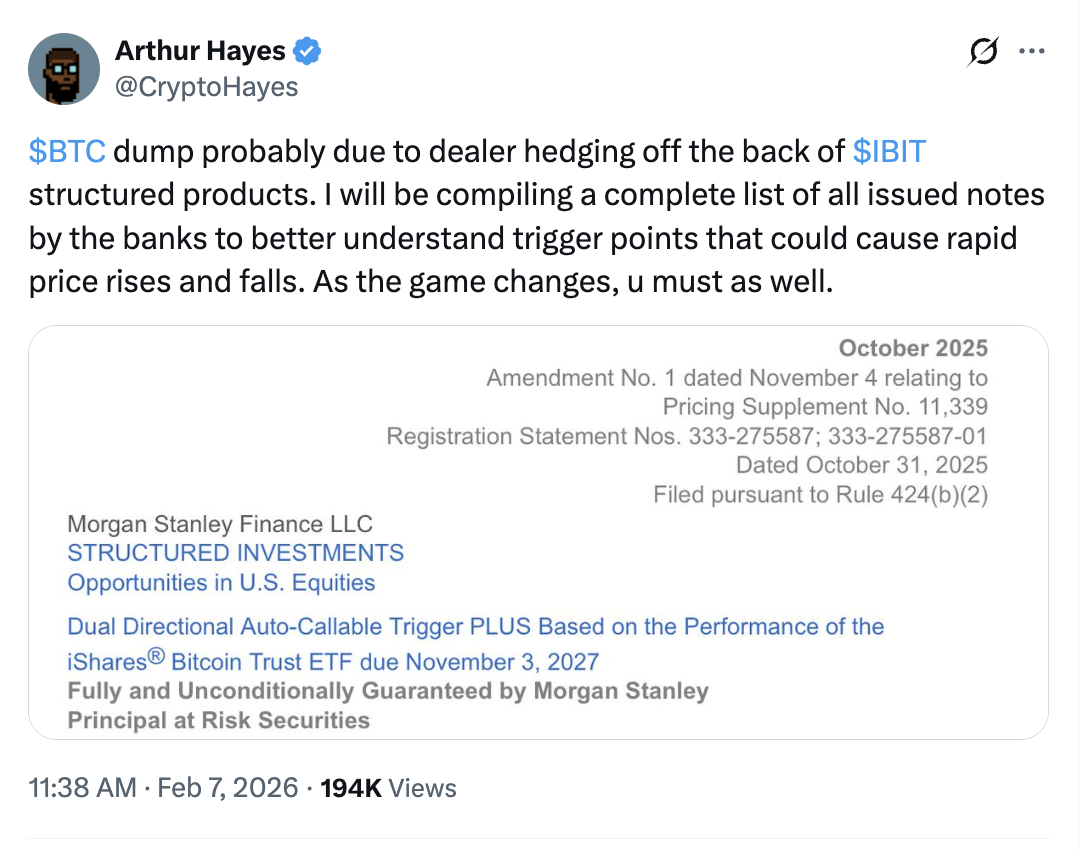
These structured notes allow clients to gain exposure to Bitcoin's price with features like principal protection or knockout barriers. Sharp declines that breach certain thresholds—for example, levels noted in a specific Morgan Stanley filing around $78,700—trigger delta-hedging requirements. Dealers then sell BTC or futures to stay neutral, and in a falling market this leads to negative gamma dynamics: further price drops force even larger sales, amplifying the move lower and turning hedging activity into a major contributor to the selloff.
Miners shifting from Bitcoin to AI
A quieter but plausible factor is the shift happening among miners. Rising demand for AI data centers is prompting some operations to redirect hardware and power away from Bitcoin mining, resulting in noticeable hash rate declines of 10-40%.
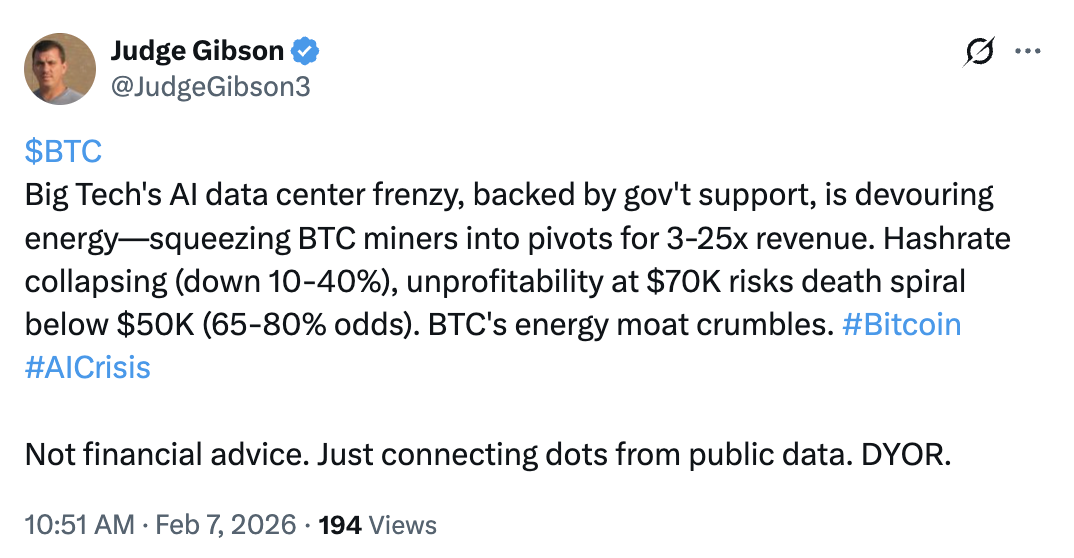
Riot Platforms, for example, announced a broader data center focus in December 2025 and sold $161 million in Bitcoin holdings. IREN followed with its own pivot to AI infrastructure last week. The Hash Ribbons metric is also signaling trouble: the 30-day moving average of hash rate has crossed below the 60-day average, a bearish inversion that historically precedes periods of miner capitulation and additional selling pressure.
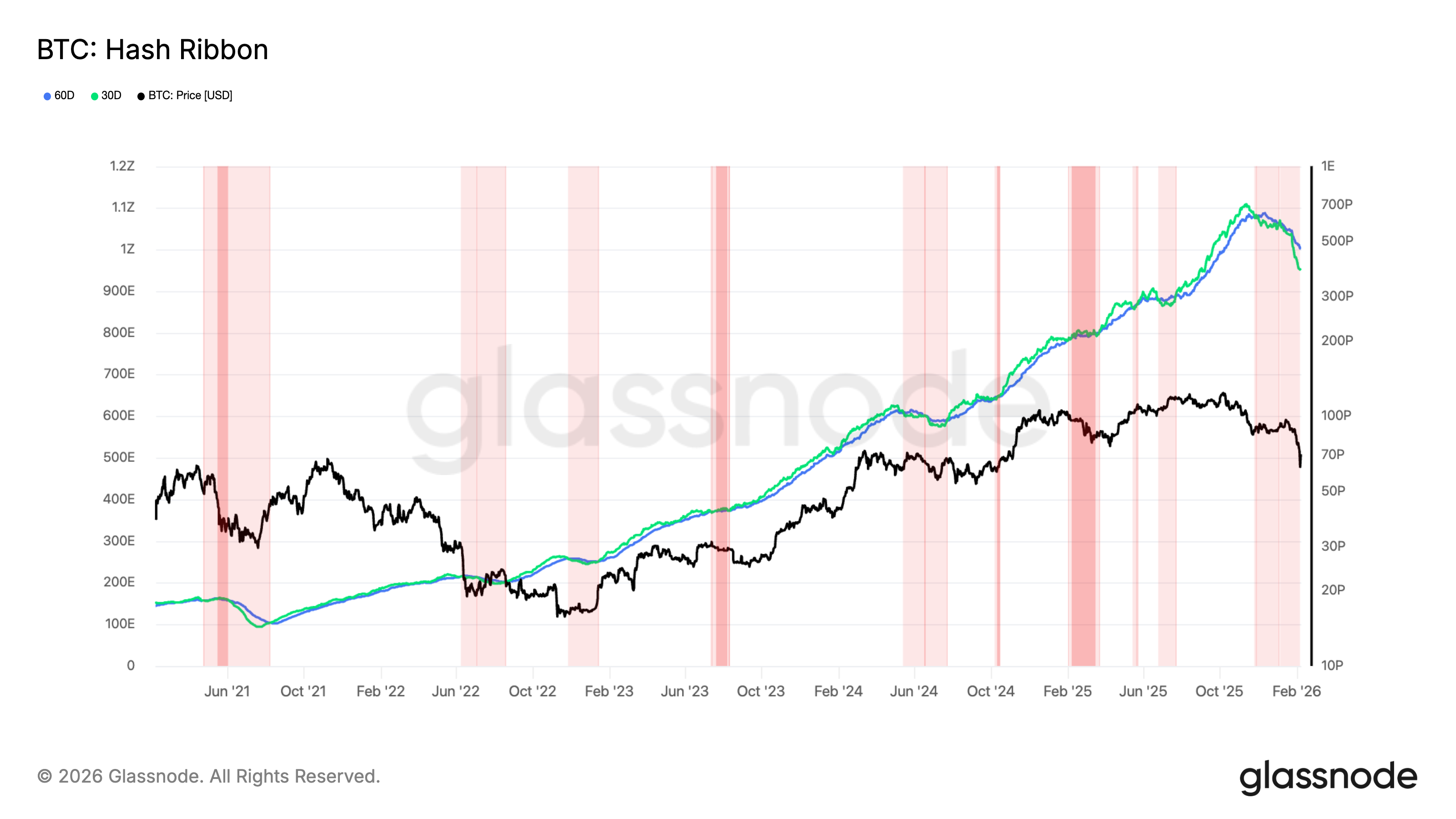
Current figures show average electricity cost to mine one Bitcoin sitting around $58,160, with full net production costs estimated at about $72,700. Should Bitcoin fall back below $60,000, many miners would face genuine financial strain, which could lead to more BTC hitting the market. Long-term holder behavior is shifting as well, with their portion of circulating supply reaching the lowest level in nine months.