

DEX On-Chain Accumulation Signals Before a Pump: How to Spot Early Buying on Decentralized Exchanges
Mar 04, 2026 23:13
If you want to catch a token before it takes off, price charts alone are not enough.
On decentralized exchanges (DEXs), every swap and liquidity change is recorded on-chain. That means you can see buying activity as it happens, even when the price is still flat.
This guide explains what DEX on-chain accumulation signals are, why they often appear before a pump, and how you can track them in a simple, practical way.
What Is DEX On-Chain Accumulation?Accumulation is when buyers quietly build positions over time instead of buying all at once.
On a DEX, this shows up as steady buying, liquidity changes, and large wallet activity that does not immediately move the price.
Instead of reacting to green candles, you’re watching capital flow directly on-chain.
When demand increases while price remains stable, that imbalance can lead to a breakout later.
Why DEX Data Matters More Than You ThinkMost retail traders wait for:
- A breakout on the chart
- A spike in social media mentions
- A listing on a centralized exchange
By the time those happen, early buyers are often already positioned.
DEX activity comes first. It reflects actual swaps and liquidity movement in real time. That is where early accumulation often begins.
Key DEX Accumulation Signals Before a Price Pump 1. Rising Volume-to-TVL RatioThis is one of the most useful DEX metrics.
TVL (Total Value Locked) represents liquidity in a pool. Volume shows how much trading activity is happening.
When trading volume rises faster than liquidity, it can signal growing demand.
If price has not moved yet, that mismatch can indicate early accumulation.
What to look for:
- Volume increasing over several days
- TVL stable or slowly rising
- Price still moving sideways
This often means buyers are stepping in quietly.
2. Whale Accumulation on DEXLarge wallets tend to move early.
When whales buy through DEXs, their activity appears as:
- Large swaps into a token
- Repeated buys over time
- Growing wallet balances
If whales accumulate while price is flat or slightly down, that can be a strong signal.
One large buy is not enough. Consistent accumulation matters more.
3. Liquidity Growth Without a Price SpikeLiquidity growth alone is not bullish.
But liquidity growth paired with steady buy pressure can be meaningful.
If more capital flows into pools and trading activity increases, it often shows confidence from larger participants.
When price lags behind those changes, the setup can build quietly before moving.
4. Repeated Buy Pressure With Low VolatilitySometimes accumulation looks boring.
The chart barely moves. There is no hype.
But on-chain you may see:
- Frequent medium-sized buys
- Fewer large sell orders
- Gradual balance increases across multiple wallets
This kind of behavior can build a strong base before expansion.
How These Signals Work TogetherNo single metric predicts a pump.
The strongest setups usually combine signals.
For example:
- Rising volume-to-TVL ratio
- Whale wallets increasing positions
- Liquidity trending upward
- Price still ranging
When several of these appear together, the probability of a breakout increases.
Think in terms of clusters, not isolated data points.
What Most Articles Miss About DEX AccumulationMany guides focus on:
- Active wallet counts
- Exchange inflows and outflows
- Social sentiment
Those can be useful, but they are not DEX-specific.
Very few articles explain how to:
- Use DEX volume-to-TVL ratio as an early signal
- Identify whale accumulation directly on DEX pools
- Combine liquidity changes with buy flow data
That gap creates an opportunity. Traders looking for early entries are searching for this exact information.
A Simple Beginner WorkflowHere is a basic way to approach DEX accumulation signals:
- Identify a token trading sideways.
- Check if DEX volume is rising.
- Compare volume to TVL. Is trading activity increasing faster than liquidity?
- Look for repeated large buys or wallet accumulation.
- Confirm that price has not already broken out.
You are not trying to predict the exact moment of the pump.
You are trying to position before the crowd notices.
Why This Matters in Fast MarketsIn DeFi, moves can be sharp.
Once momentum starts, entries become riskier.
Watching on-chain DEX data helps you shift from reacting to anticipating.
It does not remove risk. Nothing does.
But it gives you more context than price alone.
How to Track DEX Accumulation Signals EasilyManually checking wallets, liquidity pools, and volume metrics across multiple tokens is time-consuming.
You need a way to see:
- Real-time DEX buy flows
- Whale-sized swaps
- Volume and liquidity changes
- Early accumulation patterns
That is exactly what the BlockSonar DEX tool is built for.
You can monitor DEX flows and whale activity in one place and spot accumulation before price confirms.
If you want to start tracking DEX on-chain accumulation signals before a pump, go here:
https://www.blocksonar.net/dex/
Use it to watch real-time DEX activity and see where capital is moving before the charts light up.
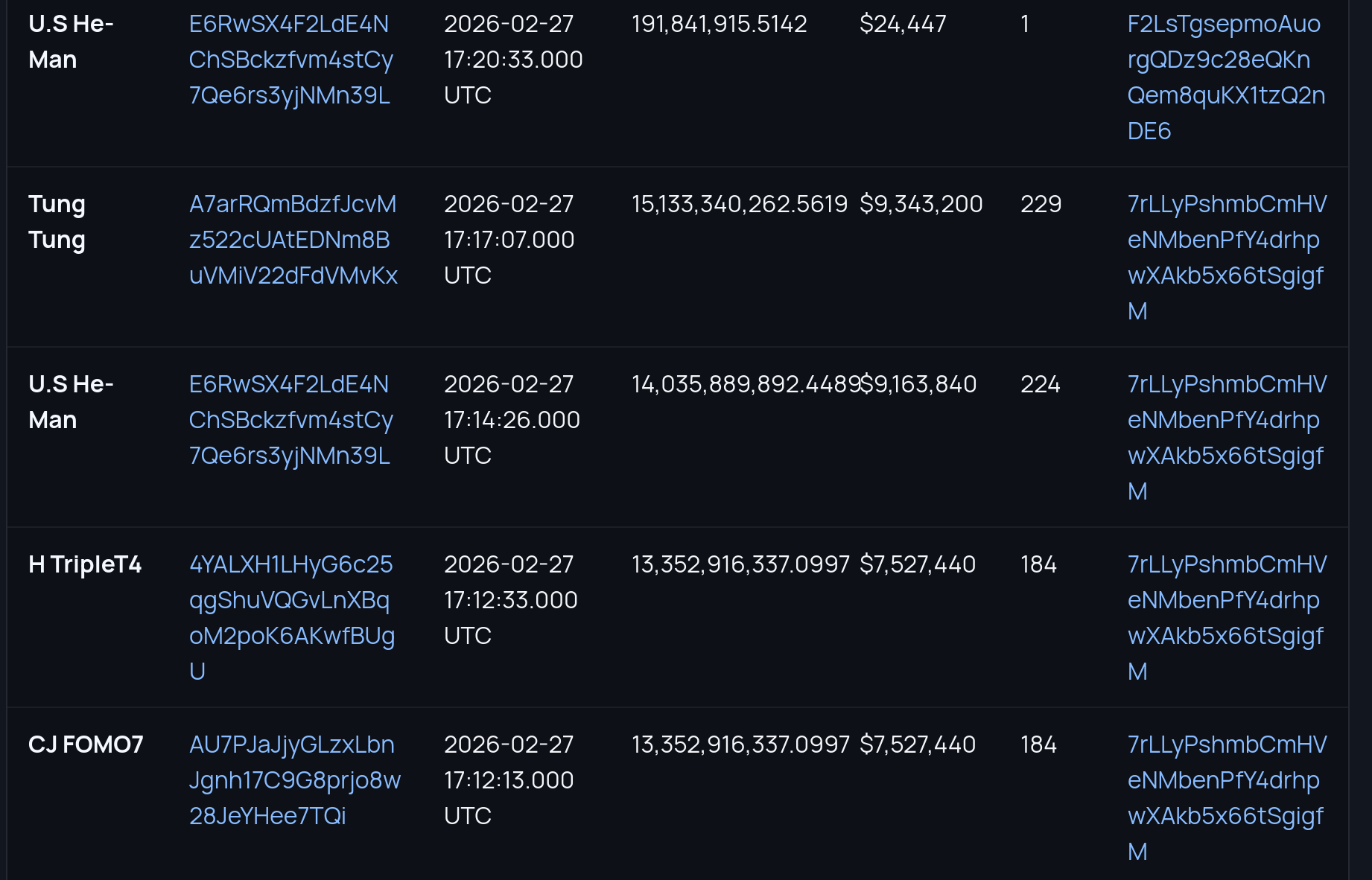
DEX on-chain accumulation signals are not magic indicators.
They are evidence of capital positioning.
When volume rises, whales accumulate, liquidity builds, and price stays quiet, something may be forming.
Instead of waiting for a breakout candle, watch the flow first.
If you are serious about entering earlier and with more context, start monitoring DEX activity directly:
